
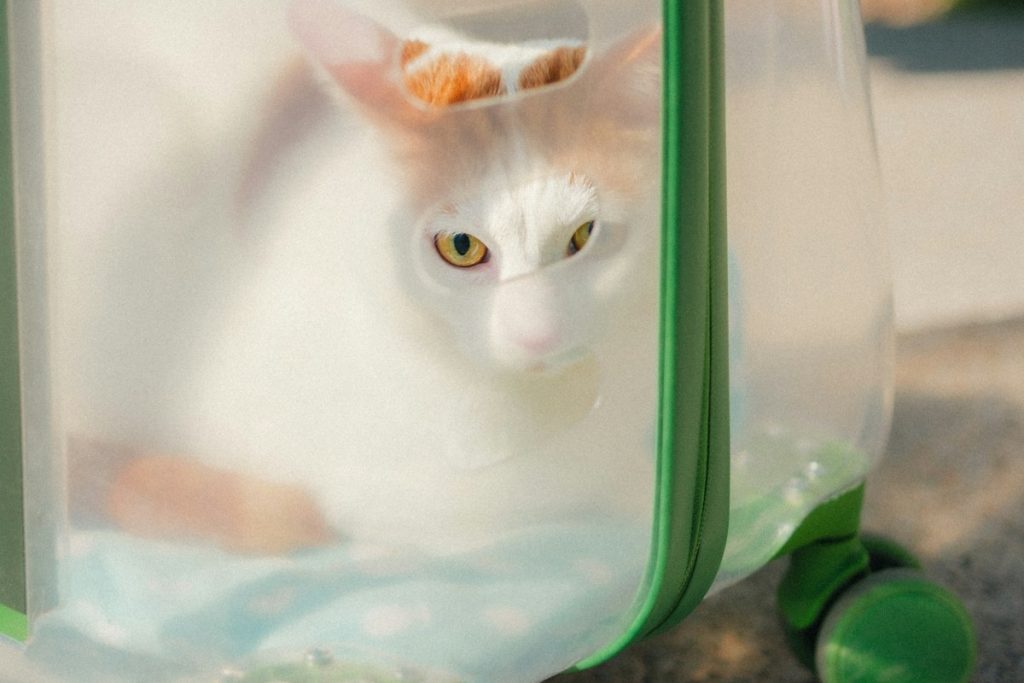
Short answer: A cat emergency kit should hold a sturdy carrier, a disposable litter pan and litter, about two weeks of food, water and medications, a basic first aid kit, ID (breakaway collar, tag and a registered microchip), copies of records with current photos, and a towel or blanket. Keep it packed near an exit.
When a storm, fire or flood forces you out of the house, there’s no time to hunt for a carrier or wonder where the vaccine records went. The ASPCA puts it bluntly: don’t leave your pets behind, because pets left on their own can get trapped or escape into dangerous conditions.
Cats add their own challenges: many hide when scared, they need a litter box wherever they land, and they have to stay confined. A go-bag packed ahead of time takes most of the scramble out of it. Here are seven essentials, based on checklists from the CDC, ASPCA, American Red Cross and Cornell Feline Health Center.
We’re not vets. This article is general information from veterinary and emergency-management sources. Ask your veterinarian about your cat’s medications, records and any special needs, and follow instructions from local officials during an emergency.
What goes in a cat emergency kit?
- A sturdy, labeled carrier
- A disposable litter pan and litter
- Food, water and bowls for about two weeks
- Medications and a basic first aid kit
- ID: a breakaway collar, a tag and a registered microchip
- Records and current photos in a waterproof pouch
- A towel, blanket or pillowcase for handling and calming
1. A sturdy carrier (and a cat who will get in it)
The carrier is the one item you can’t improvise. The American Red Cross lists sturdy carriers to transport pets safely and make sure they can’t escape, and the ASPCA recommends a sturdy carrier, ideally one per pet. Both the ASPCA and CDC say to label it with your cat’s name and your contact information. The CDC suggests keeping the carrier near the exit.
What kind of carrier works best?
The American Association of Feline Practitioners (AAFP) recommends hard-sided carriers that open from both the top and the front. A removable top lets a frightened cat stay in the bottom half during an exam. ASPCA guidance on carrier training favors sturdy plastic with a metal door, since plastic doors are more prone to breaking, and says the carrier should be big enough for your cat to turn around in.
How do you carrier train a cat?
A cat who already trusts the carrier is much easier to load in a hurry. The ASPCA lays out a gradual approach:
- Make it furniture. Leave the carrier out, door propped open, in a room where your cat already spends time. Add comfy bedding and a favorite toy.
- Feed nearby, then inside. Serve meals beside the carrier, then move the bowl a little deeper over several meals until your cat eats all the way at the back. Hide treats inside too.
- Close the door briefly. Once your cat eats inside calmly, gently close the door for a few minutes during a meal.
- Add movement. When a closed door is no big deal, carry the carrier around the house and reward with treats or play.
The AAFP also suggests a synthetic feline facial pheromone spray in the carrier at least 30 minutes before travel.
Products that fit
Petmate E-Z Load Top Load Cat Kennel
A durable plastic, top-loading kennel with a metal grid door. It’s rated for pets up to 10 pounds, so size up for a bigger cat.
See on Amazon →As an Amazon Associate we earn from qualifying purchases. Prices change often, so we don’t list them.
2. A disposable litter pan and litter
Your cat still needs a bathroom in a car, a hotel room or a relative’s spare bedroom. The ASPCA lists disposable litter trays and litter (or paper towels), and suggests scoopable litter for cats. Cornell’s kit adds a small litter box, two weeks of litter, a small scooper and bags for solid waste. Pack liquid dish soap, paper towels, disinfectant and garbage bags for cleanup, too.
Stress can make cats skip the box, so pack the litter your cat already uses. Our guide on why cats pee outside the litter box explains how stress and litter changes play a part.
Products that fit
PetSafe Disposable Litter Box with Crystal Litter
A travel-friendly box that stands up and collapses, with a protective coating PetSafe says prevents leaks. It comes with a pre-portioned 4.3 lb bag of crystal litter and disposable scoops.
See on Amazon →As an Amazon Associate we earn from qualifying purchases. Prices change often, so we don’t list them.
3. How much food and water should you pack for a cat?
Plan on about two weeks. The CDC and Cornell both recommend a two-week supply of food and water for each animal. The ASPCA’s minimum is 7 to 10 days of canned or dry food, plus at least seven days of bottled water per person and pet. Aiming for two weeks covers you either way.
- Store it right. The CDC suggests waterproof containers for food. Cornell says to keep water in plastic containers in a dark place.
- Rotate it. The ASPCA says to rotate food and water every two months. Cornell suggests rotating water every two to three months.
- Don’t forget the tools. Pack non-spill dishes, a manual can opener if your cat eats canned food (pop-top cans skip that step), and written feeding instructions in case someone else has to care for your cat.
Cats under stress may not drink much, so keep fresh water on offer wherever you land. Our tips on getting your cat to drink more water work in a hotel room too.
Products that fit
Kurgo Collaps A Bowl
A food-grade silicone bowl that holds 24 fl. oz. and collapses to less than 1 inch high, so a pair fits easily in a go-bag. The maker lists it as BPA and PVC free and top-rack dishwasher safe.
See on Amazon →As an Amazon Associate we earn from qualifying purchases. Prices change often, so we don’t list them.
4. Medications and a basic first aid kit
If your cat takes any medication, the CDC and Cornell both say to pack a two-week supply, and the ASPCA suggests keeping it in a waterproof container. Add written medication instructions. The CDC also lists a one-month supply of flea and tick preventive.
For first aid, Cornell suggests gauze pads, conforming bandages, cotton swabs, antiseptic wipes, tweezers, scissors, triple antibiotic ointment, disposable exam gloves and an instant cold pack. The ASPCA and CDC both add a pet first aid book. Keep in mind the CDC’s caution that first aid for pets should never replace veterinary care: it’s for stabilizing until you can reach a vet.
5. ID: breakaway collar, tag and a registered microchip
A frightened cat can slip out of a carrier or a strange house. Cornell recommends a breakaway collar with an ID tag on your cat at all times, plus a spare collar and tag in the kit. The ASPCA says the tag should show your cat’s name, your phone number and any urgent medical needs.
Collars can come off, which is the point of a breakaway buckle, so back them up with a microchip. The CDC says to register the chip with the manufacturer and keep your contact details current. Write the chip number and the microchip company’s name and phone number on a card for your records pouch.
Optional: a harness and leash
Cornell suggests packing a harness and leash even if you don’t normally use them, and the CDC lists one too. Fit it ahead of time, and never clip a leash to a breakaway collar, since it’s designed to come apart.
Products that fit
Safe Cat Adjustable Snag-Proof Breakaway Collar
A snag-proof nylon collar from Coastal Pet with a breakaway buckle designed to release if your cat gets caught. It adjusts from 8 to 12 inches. Coastal says not to use it with a leash or tie-out.
See on Amazon →As an Amazon Associate we earn from qualifying purchases. Prices change often, so we don’t list them.
6. Records and current photos in a waterproof pouch
The American Red Cross notes that many shelters require proof of current vaccinations, so paperwork can decide where your cat is allowed to stay. The CDC recommends a waterproof container holding:
- Copies of veterinary records, including the rabies certificate, vaccinations, a medical summary, prescriptions and, for cats, the most recent FeLV/FIV test
- Proof of ownership or adoption records
- A written description of your cat (breed, sex, color and weight)
- Microchip details and your contact information, including where you might stay
- Recent photos of your cat
Make at least one of those photos a picture of you with your cat. The Red Cross and Cornell both recommend this, since it helps identify your cat and show ownership if you get separated.
7. A towel, blanket or pillowcase for handling and calming
The CDC lists a pet carrier with bedding, a blanket or a towel, and the ASPCA includes a blanket and, for cats, a pillowcase. A towel can help you wrap and lift a cat who doesn’t want to be held, and the AAFP notes some cats feel less anxious when the carrier is covered with a blanket or towel that blocks their view.
Practice matters as much as the gear. The CDC suggests practicing how you’d get your cat out of a hiding spot using the carrier, a pillowcase or a sturdy box, and closing off small spaces like vents or the gap under heavy furniture where a scared cat could get stuck.
Where will your cat stay if you have to evacuate?
Decide this before you need it. The CDC warns that pets may not be allowed in local shelters unless they are service animals, and that many evacuation centers don’t accept pets. The Red Cross says it will try to accommodate household pets at its shelters, but pets may need to be housed elsewhere with animal welfare groups, and hotels may not accept animals other than service animals.
The ASPCA suggests lining up options such as pet-friendly hotels outside your immediate area, friends or relatives farther away, boarding facilities your vet recommends, and your local animal shelter, which may offer emergency foster care. The Red Cross suggests calling hotels along your evacuation route ahead of time and asking whether no-pet policies can be waived in an emergency.
Put up a rescue alert sticker
In case disaster hits while you’re away, the ASPCA recommends a rescue alert sticker on or near your front door listing the number and types of pets inside and your vet’s name and phone number. The ASPCA offers a free one (allow 6 to 8 weeks for delivery). If you leave with your cat, write “EVACUATED” across it.
Cat emergency kit checklist
| Item | How much / details |
|---|---|
| Sturdy carrier, labeled | One per cat, big enough to turn around in |
| Disposable litter pan, litter, scoop, bags | About two weeks of litter |
| Food in waterproof containers | Two weeks (ASPCA minimum: 7 to 10 days) |
| Water | Two weeks (ASPCA minimum: 7 days) |
| Non-spill bowls, can opener, feeding notes | One set per cat |
| Medications and instructions | Two-week supply, waterproof container |
| First aid kit and pet first aid book | Gauze, bandages, antiseptic wipes, tweezers, gloves, cold pack |
| Breakaway collar with ID tag, plus a spare | Name, phone number, urgent medical needs |
| Microchip details | Chip number, company name and phone |
| Records in a waterproof pouch | Rabies, vaccines, FeLV/FIV test, prescriptions, proof of ownership |
| Current photos, including you with your cat | Printed and on your phone |
| Towel, blanket or pillowcase, toys | For handling, covering the carrier and comfort |
| Cleaning supplies | Paper towels, dish soap, disinfectant, garbage bags |
| Harness and leash (optional) | Fitted ahead of time |
| Rescue alert sticker | On or near the front door |
Be ready before you need to be
The ASPCA suggests keeping the kit clearly labeled, easy to carry and near an exit, and making sure everyone in the household knows where it is. Set a calendar reminder to swap food and water every couple of months.
Set aside an hour this week. Pack the bag, print the records, update the microchip registration and leave the carrier out with a soft blanket inside. If an emergency ever comes, your cat will already know the carrier, and you’ll already know where everything is. For more everyday care guides, visit our Cat Care section.
Frequently asked questions
How many days of food should be in a cat emergency kit?
The CDC and the Cornell Feline Health Center both recommend a two-week supply of food and water. The ASPCA’s minimum is 7 to 10 days of food. Rotate the food and water every couple of months so it stays fresh.
Can I bring my cat to an emergency shelter?
Not always. The CDC warns that pets may not be allowed in local shelters unless they are service animals. The Red Cross tries to accommodate pets, but they may be housed elsewhere. Line up pet-friendly hotels, friends or relatives, or boarding options ahead of time.
What kind of carrier is best for evacuating a cat?
The AAFP recommends a hard-sided carrier that opens from the top and the front. The ASPCA favors sturdy plastic with a metal door, large enough for your cat to turn around in. Label it with your cat’s name and your phone number.
Does my cat need a collar if it is microchipped?
Both help. Cornell recommends a breakaway collar with an ID tag at all times, and the CDC says to register your cat’s microchip and keep your contact details current. A tag can be read by anyone, while a chip still works if the collar comes off.
Shopping for the kit? Browse our Cat Products guides.
Sources
- CDC: Build a Pet Disaster Preparedness Kit
- CDC: Pet Safety in Emergencies
- ASPCA: Disaster Preparedness
- ASPCA: Teaching Cats to Ride in Carriers (PDF)
- American Red Cross: Pet Disaster Preparedness
- Cornell Feline Health Center: Disaster Preparedness
- American Association of Feline Practitioners: Getting Your Cat to the Veterinarian