
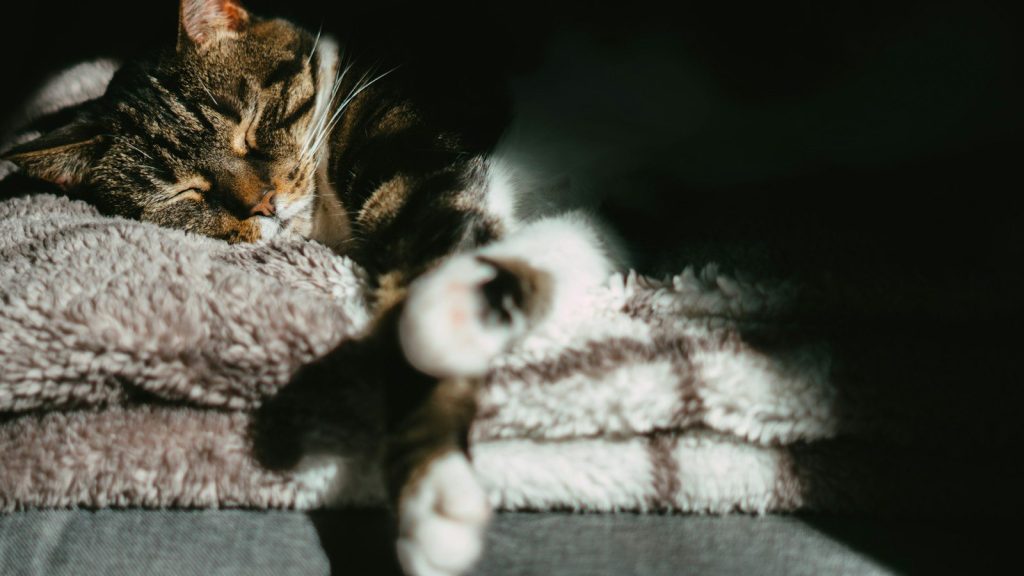
Short answer: Kittens knead their mother to help the milk flow, and many cats keep the habit as adults when they feel relaxed and content. Kneading can also show affection, leave scent from glands in the paws and soften a resting spot. Occasional kneading is normal; sudden, frequent kneading can signal stress or discomfort.
Kneading, also called “making biscuits,” is when a cat pushes rhythmically with its front paws, often on a blanket, a pillow or your lap. It’s one of the most familiar cat behaviors, and it usually means good things.
Why do cats knead? 5 reasons
1. It starts in kittenhood
Kittens knead their mother while nursing to stimulate milk flow, according to VCA Animal Hospitals. The Conversation notes the behavior likely evolved for this reason.
2. Your cat feels relaxed
Many cats keep kneading into adulthood. VCA says that when you see a cat kneading, they’re usually feeling comfortable and relaxed, perhaps recapturing the calm of nursing.
3. It’s a sign of affection
Cats don’t usually knead on people or animals they don’t like, VCA notes. The Conversation describes kneading on a person’s lap as a sign that you’re part of the cat’s social group.
4. Scent marking
Cats have scent glands in their paws, so kneading may leave their scent behind, VCA explains. The Conversation adds that these scents carry bonding messages between kittens and their mother.
5. Making a comfy spot
VCA suggests cats’ ancestors may have kneaded the ground to soften a place to rest, a habit that may carry over to blankets and beds.
What if kneading hurts?
Kneading with claws out can be painful. Here’s what VCA, The Conversation and the ASPCA suggest:
- Keep claws trimmed. The ASPCA recommends a trim every 10 to 14 days, cutting only the white tip.
- Put a thick blanket on your lap before your cat settles in.
- Don’t scold your cat or push them off. Kneading is a friendly behavior.
- Reward gentle kneading with attention, petting or a treat when your cat keeps claws in.
- Offer a kneading spot, such as a soft blanket, and encourage it with treats and toys.
When is kneading a concern?
Occasional kneading is normal. VCA notes that kneading in unusual places or much more often than usual, together with hiding or appetite changes, can mean a cat feels unwell and is trying to self-soothe. The Conversation adds that if kneading and sucking on blankets become frequent, compulsive or start damaging your cat’s paws or mouth, your cat may be stressed or in pain. In either case, talk to your vet.
Curious about other cat habits? Explore our Cat Behavior section.
Frequently asked questions
Why does my cat knead me?
Usually because they feel relaxed and comfortable with you. VCA notes cats don’t usually knead on people they don’t like, and kneading may also leave their scent on you.
Should I stop my cat from kneading?
There’s no need to stop normal kneading. If claws are the problem, trim them regularly, use a thick blanket and reward gentle kneading rather than scolding your cat.
Why does my cat knead and suck on blankets?
Some cats knead and suck on soft blankets, which may be soothing. If it becomes frequent, compulsive or causes injuries, The Conversation advises having your cat checked by a vet, since stress or pain can be involved.